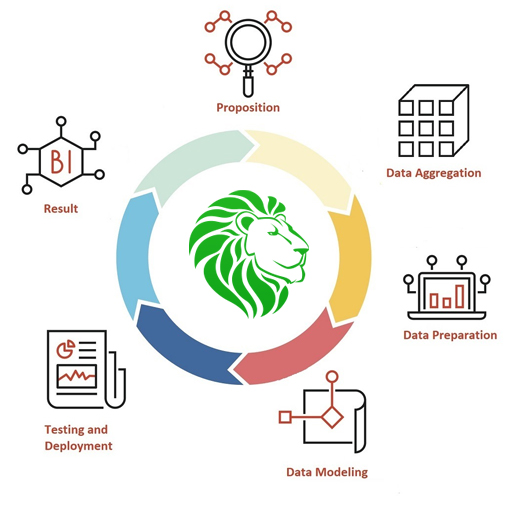
Integrate your data and Empower your business team.
Data aggregation refers to the process of gathering and summarizing data from multiple sources into a single dataset or repository for analysis, reporting, or visualization purposes. It involves combining individual data points or records to form a larger dataset that provides a broader perspective or insight into a particular phenomenon or topic.
Data aggregation can occur at different levels, including:
Temporal Aggregation: Combining data over specific time intervals, such as hourly, daily, weekly, or monthly, to analyze trends and patterns over time.
Spatial Aggregation: Combining data from different geographical regions or areas to analyze spatial trends or patterns.
Hierarchical Aggregation: Aggregating data at different levels of granularity or hierarchy, such as aggregating sales data from individual transactions to summarize by region, country, or continent.
Attribute Aggregation: Aggregating data based on specific attributes or characteristics, such as summing sales revenue by product category or averaging customer satisfaction scores by demographic group.
Data aggregation is commonly used in various fields, including business analytics, finance, economics, healthcare, and social sciences, to derive meaningful insights from large and complex datasets. It helps identify trends, patterns, and relationships that may not be apparent when analyzing individual data points separately, enabling informed decision-making and strategic planning.